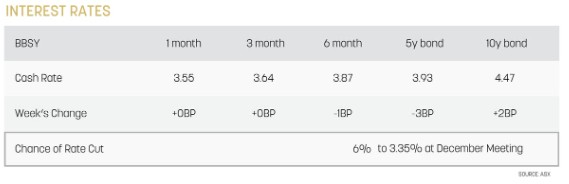
Minimal change to Money Market pricing and interest rate expectations.
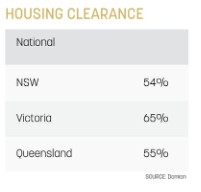
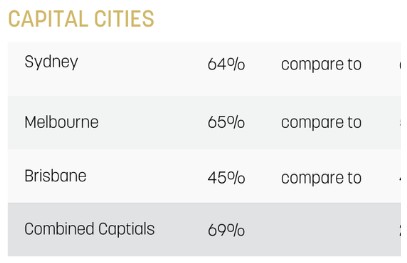
Australia faces a chronic housing shortage driven by rapid population growth and insufficient construction. Industry experts estimate an accumulated deficit of 200,000 to 300,000 homes, emerging since the mid-2000s when population growth accelerated but housing supply failed to keep pace.
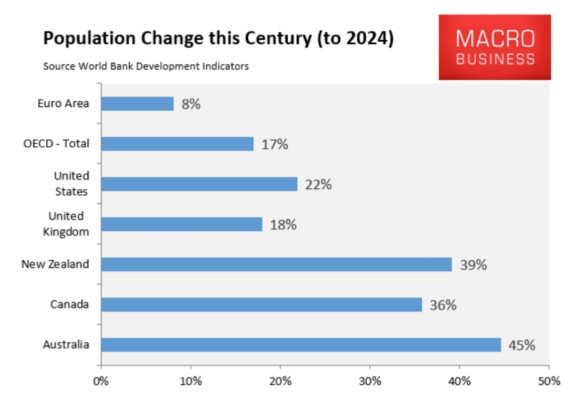
Australia has experienced the strongest population growth in the developed world this century, yet the number of homes built per new resident has declined, despite average annual construction increasing to 174,000 dwellings over the past 20 years.
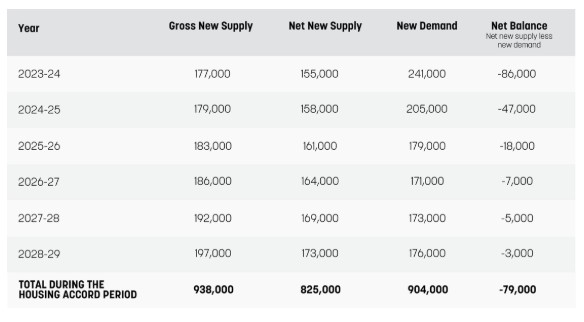
The Housing Industry Association warns that even the current goal of 240,000 homes a year is now inadequate to prevent affordability from worsening. The National Housing Supply and Affordability Council forecasts that new housing supply will remain below demand through 2028–29, adding a further 79,000 homes to the shortfall. As a result, rents will rise, vacancy rates will stay below average and home prices will rise. Housing density will increase, with more duel income homes, increased multi-generational living, and increasingly multi-family living arrangements.
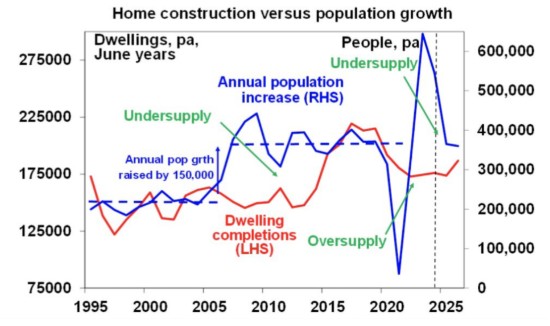
Sensitivity modelling shows the shortage could exceed 400,000 homes by 2029 if population growth continues to outpace expectations. Overall, Australia’s housing market has been structurally undersupplied for nearly two decades, with demand persistently exceeding new supply.
What does this imply:
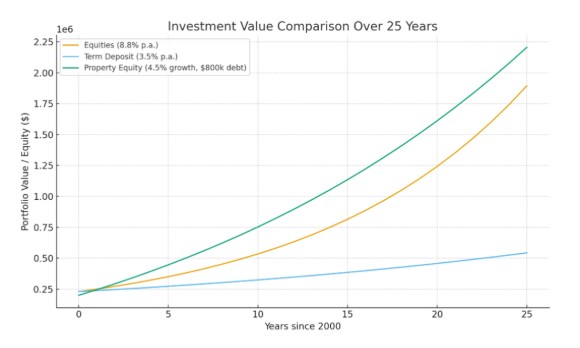
This century property investment has returned a nominal average of around 8%p.a. from capital growth plus long-term net rent. When you do the maths, this means a $230k investment ($200k down-payment and $30k stamp duty) in the year 2000 on a $1million property, would be worth $2.2 million today after repayment of debt.
This compares favourably with an investment in shares - $1.89 million, or just $0.554m from risk-free savings in the bank.
Australia doesn’t have a housing problem — we have a housing crisis.
And in a chronically undersupplied market, quality property in quality locations continues to perform.